Humor as a Microscope: How to Understand Why Things Are Funny


How to Understand Why Something Is Funny
Most people laugh and move on.
A smaller group laughs, then immediately wonders, why that worked.
If you’ve ever found yourself asking why a moment was funny but not being able to explain it, that curiosity isn’t overthinking. It’s awareness looking for language.
Understanding why something is funny isn’t about dissecting jokes or turning humor into homework. It’s about learning to notice what your mind already recognizes in real time.
Humor works before explanation
The important thing to understand first is this: humor happens before logic.
You laugh, then your brain tries to catch up. That order matters. The laugh is a recognition response, not a conclusion. Something clicked. A pattern completed itself. A truth surfaced without asking permission.
That’s why explaining a joke usually ruins it. Explanation pulls the moment back into linear thinking. Humor lives just outside of that.
Humor as a microscope
Think of humor as a microscope, not a performance tool.
The microscope doesn’t create anything new. It reveals what was already there, just unnoticed. When something makes you laugh, the microscope is showing you a pattern, contrast, or truth that snapped into focus.
Most people never pause to look through it. They just enjoy the laugh and move on.
If you’re someone who wonders why something was funny, you’re already holding the microscope. You just haven’t learned how to use it gently.
What you’re actually noticing when something is funny
When you slow down just a little, you’ll see that humor usually comes from one or more of these elements:
- A pattern repeating one time too many
- A contrast between what’s expected and what actually happens
- A truth said plainly that everyone felt but no one named
- Timing that lands right before awareness catches up
- Confidence in stating the obvious without apology
None of these require cleverness. They require attention.
Understanding why something is funny means noticing which of these was present, not judging whether the joke was good.
Why overthinking feels connected to humor
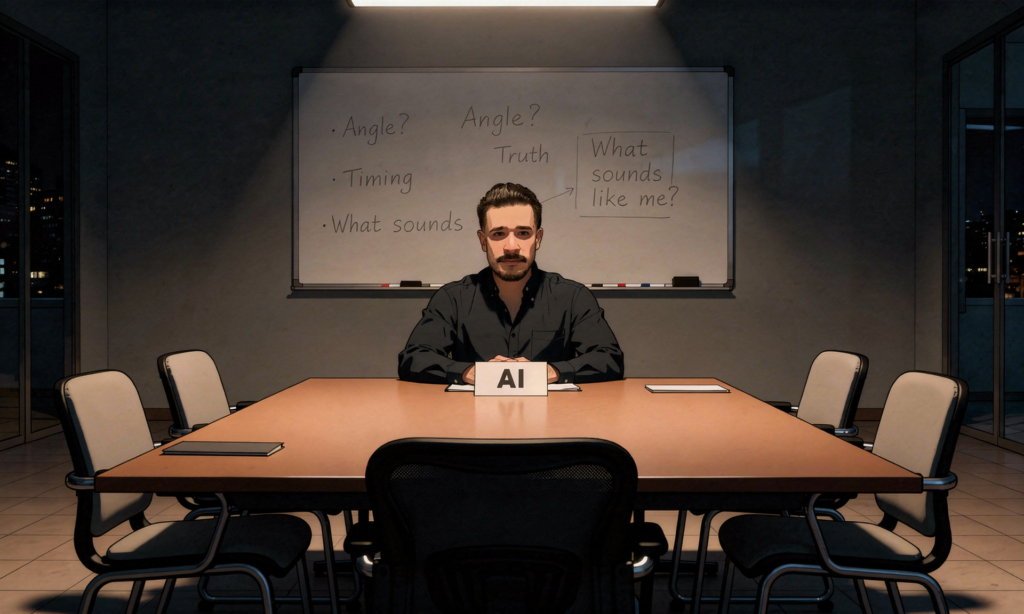
A lot of people who struggle socially are actually very good at noticing humor. They just notice it early.
They catch the pattern before the room does. Then they hesitate. They start managing the moment. They ask themselves if it’s appropriate, clear, or necessary.
By the time they decide, the moment has passed.
Later, when there’s no pressure, the same observation feels obviously funny.
That tells you something important. The humor wasn’t missing. The trust was.
Don’t ask if it’s funny, ask if it’s true
One of the simplest shifts you can make is changing the question you ask yourself.
Instead of “Is this funny?” ask “Is this true?”
Truth carries humor naturally because recognition is built in. When something is accurate, people feel it immediately. They don’t need convincing.
Cleverness wants approval. Truth invites agreement.
Why explaining kills the moment
The urge to explain usually shows up when you don’t fully trust what you noticed.
Explanation feels like safety. But humor doesn’t want safety, it wants space. The listener needs room to recognize the pattern themselves.
When you explain, you steal that moment from them.
Understanding why something is funny means learning when to stop talking, not when to add more.
Practicing the comedy microscope
You don’t practice this by writing jokes. You practice it by paying attention during everyday life.
When something makes you laugh:
- Pause for half a second
- Notice what clicked
- Name it privately, not out loud
- Move on
Over time, you start recognizing the same patterns earlier and earlier. Not to perform, but to trust.
That trust is what allows humor to show up naturally in conversation later.
This is what developing humor actually looks like
Developing humor isn’t about becoming louder, quicker, or more entertaining.
It’s about learning how your awareness works.
People who understand why something is funny aren’t trying to be funny. They’re relaxed. They’re present. They’re comfortable letting recognition happen without managing it.
That ease is what people respond to.
The real takeaway
If you’re curious about why things are funny, you already have the skill most people think they’re missing.
You’re not behind. You’re paying attention.
Understanding why something is funny isn’t about turning humor into logic. It’s about learning to trust recognition without rushing to explain it.
That’s where humor stays alive.
If you keep noticing funny moments but overthink them away, click here to try out comedy coaching to help you trust your awareness and turn those insights into natural, effortless humor.