Comedic Timing Tips: The 3 Habits That Secretly Ruin Your Timing (And What to Do Instead)

If you’re the kind of person who feels the funny in your head, but when it’s time to say it out loud, nothing comes out or not on time, you’re not broken. You’re not “not funny.” You’re not missing confidence.
You’re dealing with something way more specific, and kinda hard to describe: TIMING.
There’s a gap between the funny thought and the moment you could’ve said it. That little gap is where timing makes all the difference.
And the worst part is, most people don’t even realize they’re the one doing it. They think the problem is their jokes. It’s not. It’s the habits that interrupt the joke before it ever gets a chance.
So here are three comedic timing tips that fix the real issue, what happens in between the thought and the delivery.
Tip #1: Stop letting your “Editor” tackle your “Mic”
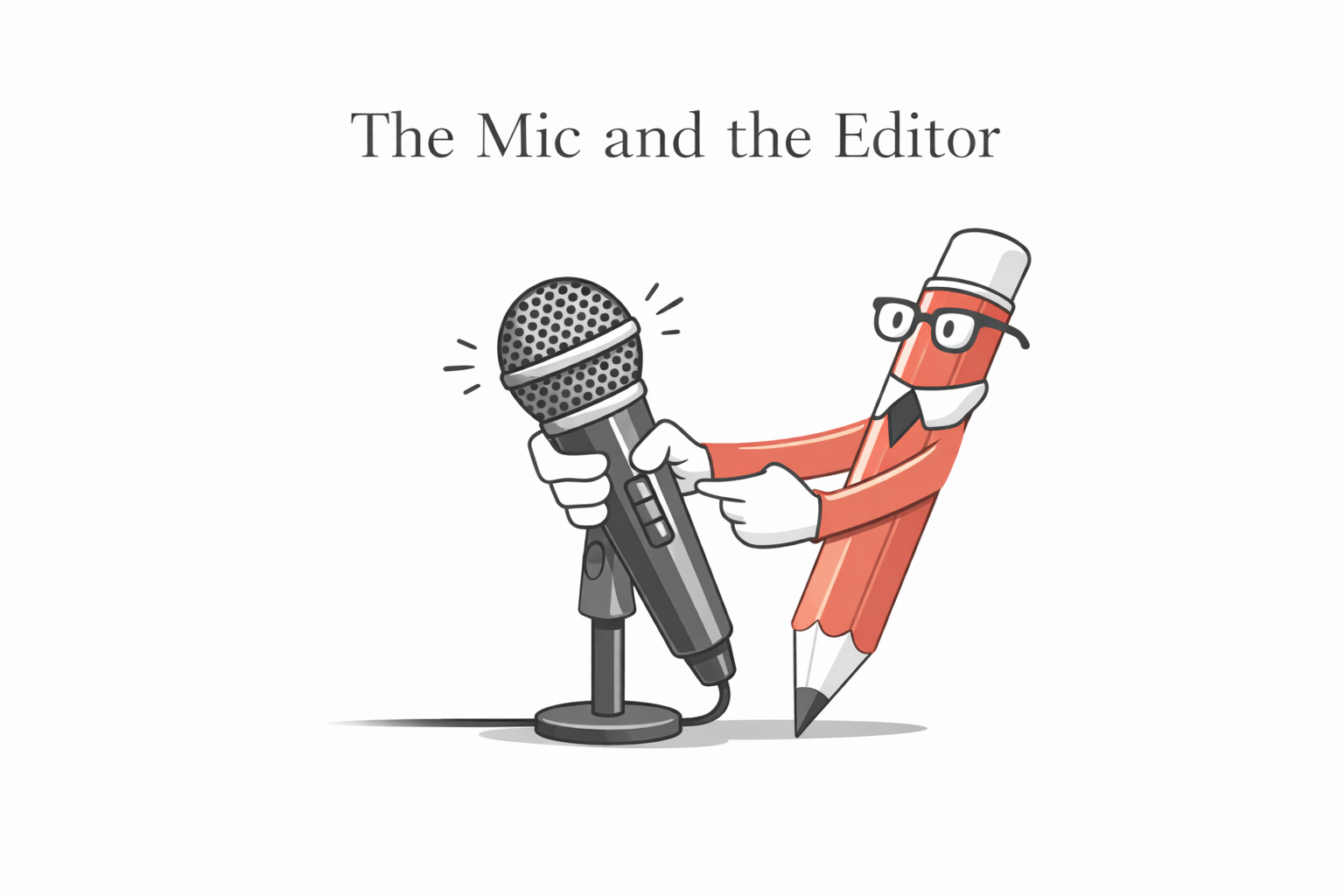
Here’s the simplest way I can explain what’s happening in your brain when you hesitate.
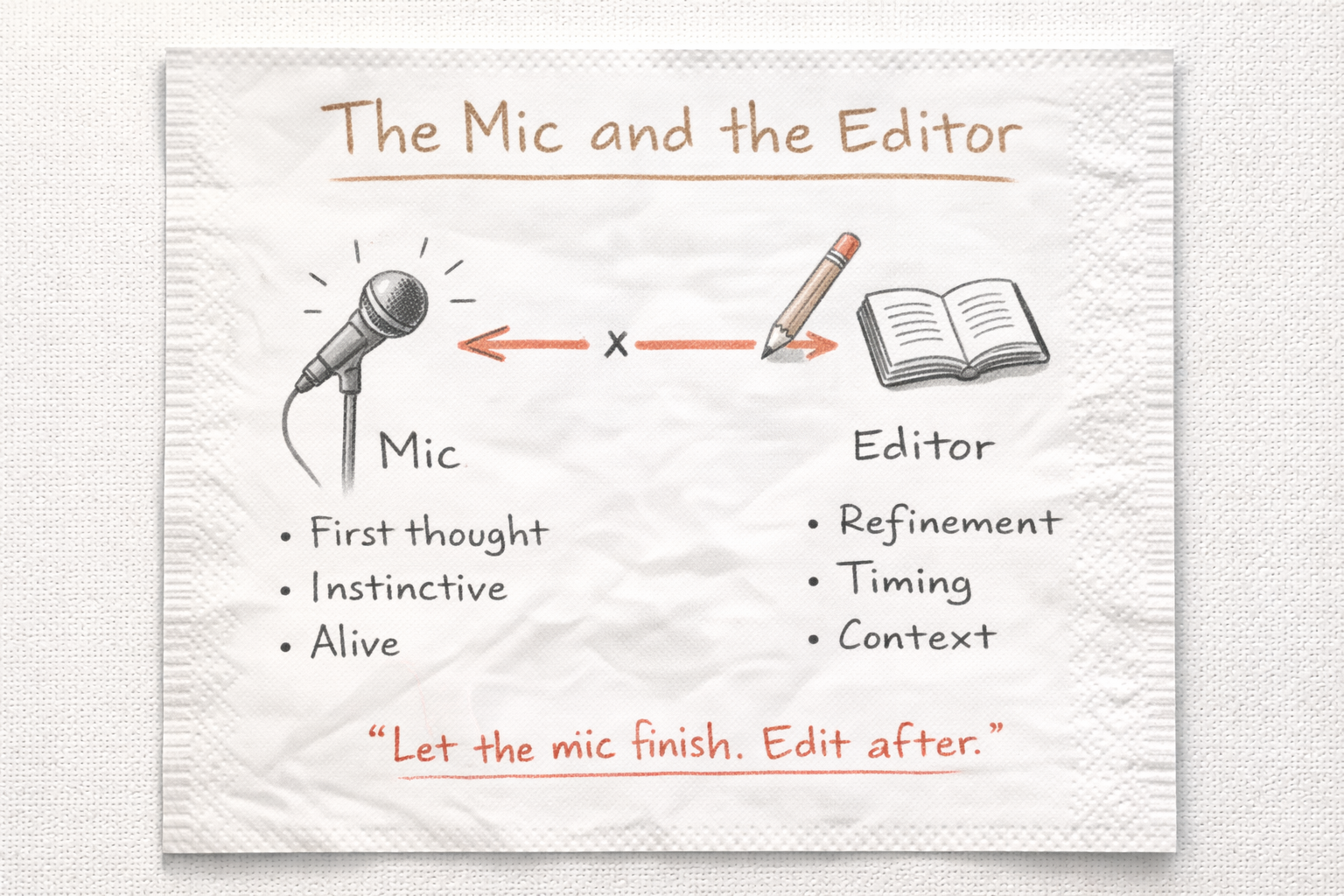
You’ve got two modes:
- The Mic
- Fast thinking
- Instinctive
- Observational
- Present to what’s happening right now
- The Editor
- Slow thinking
- Evaluates context
- Refines wording
- Checks social cues like “Is this too much?” “Will this offend?” “Do I sound dumb?”
Both are useful. I’m not here to demonize the Editor. The Editor is amazing when you’re writing, reflecting, and building material. The Editor is what helps you polish.
But in real-time conversation, the Editor is not a helpful teammate. It’s an anxious hall monitor.
When the moment is happening, your Mic needs the wheel. Your instincts are the only thing fast enough to catch timing.
If your Editor jumps in first, you don’t just lose the joke, you lose the whole moment. You end up watching life happen instead of participating in it.
What it looks like in real life
Someone does something absurd, you clock it instantly, you feel the funny thought pop up, then your brain goes:
“Wait… is that rude?”
“Will they think I’m annoying?”
“Should I phrase it differently?”
“Never mind.”
And now it’s gone.
The fix
Let the Mic talk first, then let the Editor clean it up later.
That’s the order. That’s the cheat code.
Here’s a practical drill you can use immediately:
The One-Sentence Rule
- When you get a funny thought, you get one sentence to say it.
- No backstory.
- No explanation.
- No “you had to be there.”
- One sentence, then you move on.
You’re training your Mic to trust itself.
Tip #2: Treat funny moments like waves

This is one of the biggest reasons people feel like they “missed it.”
A funny thought is not a piece of furniture. It’s not meant to sit there while you rearrange it.
Funny thoughts are waves.
They rise, they peak, they pass.
And most people ruin timing by doing one of two things:
- They don’t say it at all
- They try to grab the wave and hold it still
That second one is sneaky. That’s the person who starts explaining the joke while the joke is dying in front of everyone.
They take something that was funny in motion and freeze it like a museum exhibit.
And the moment you dissect it in real time, it stops being funny. Not because the thought was bad, but because the vibe gets strangled.
The fix
Ride the wave, then let it break.
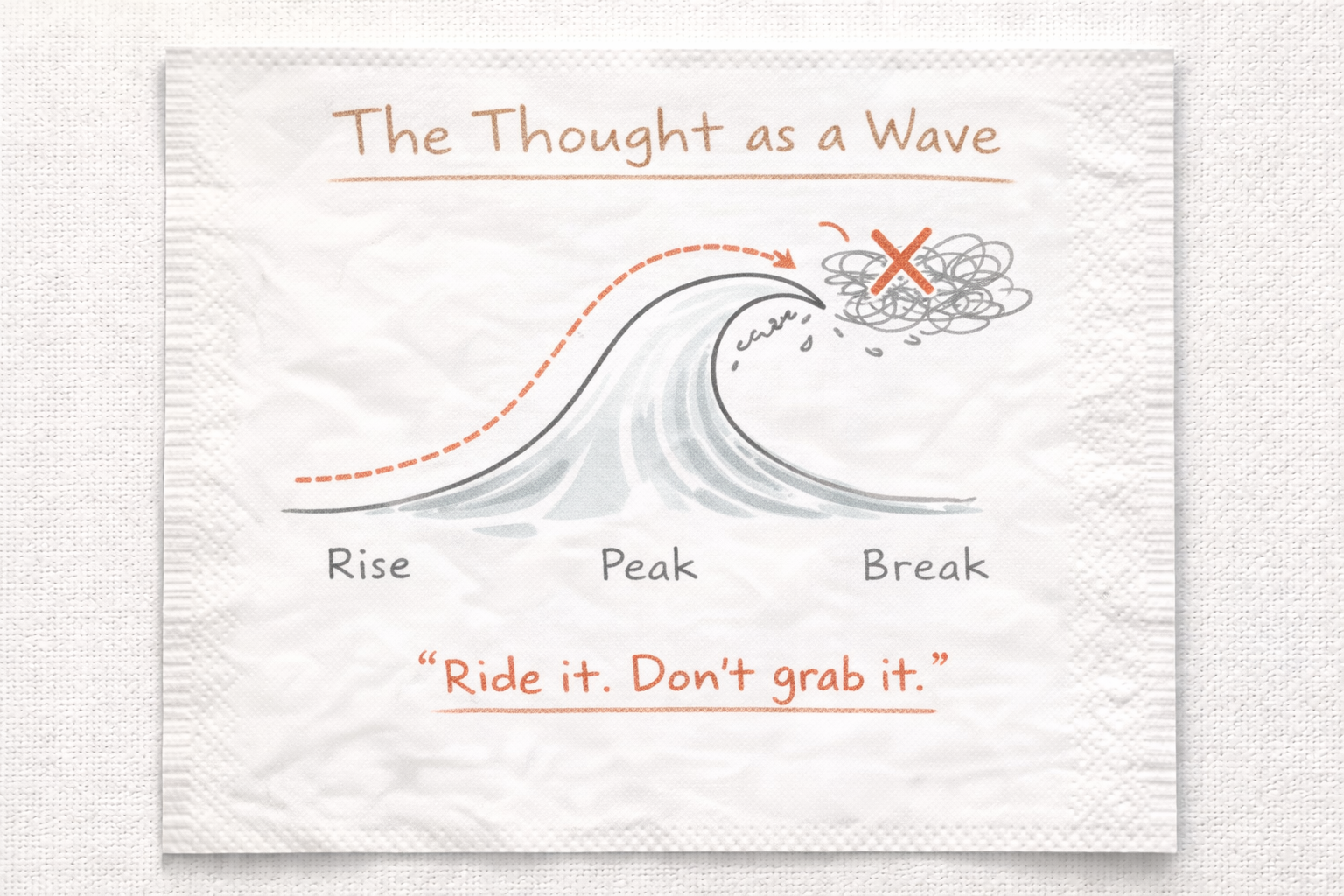
When the moment peaks, you say the thing. When it passes, you let it go. You don’t chase it down the street screaming “WAIT, I CAN EXPLAIN.”
Here’s a drill that trains this fast:
The Catch and Release Drill
- Notice a funny thought.
- Say it once, clean.
- Then intentionally stop talking.
- Let the room react.
- Let the moment move on.
Most people don’t realize how powerful silence is after a funny line. Silence is not awkward, silence is punctuation.
If you always fill the space, you kill the timing twice.
Tip #3: Notice the lag, shorten the lag
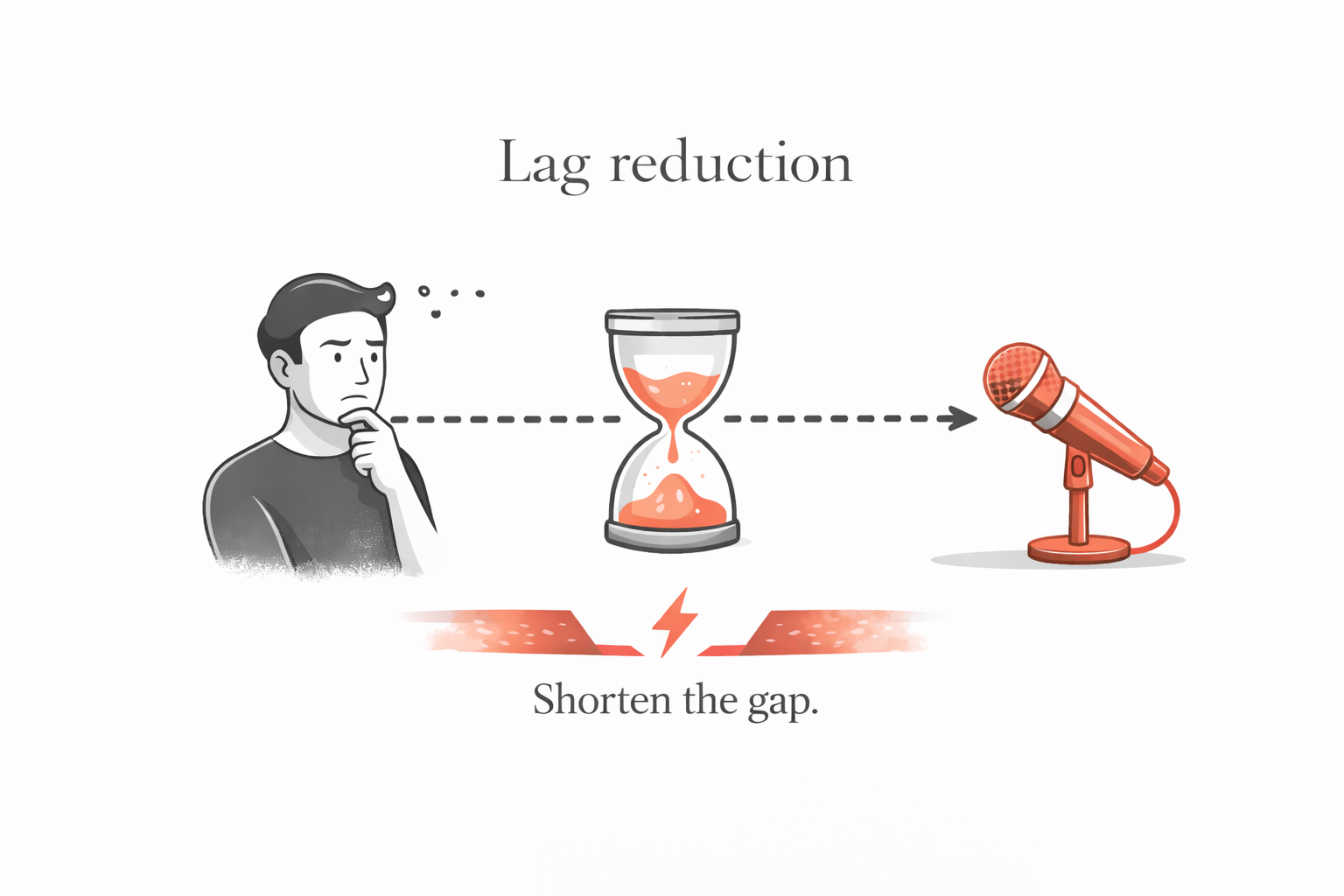
You ever see someone drop a joke five minutes after the moment passed?
Everyone just kind of looks around like, “Yeah… that was a different conversation.”
That’s lag.
And lag usually comes from two places:
1) Doubt
You have the thought, but you wait for permission from the universe.
You’re trying to build courage in real time, and that’s too slow. While you’re loading confidence, the moment already moved on.
2) Overprocessing
This is when you rewrite the joke in your head 12 times.
By the time you say it, it sounds rehearsed, robotic, or slightly off, like you’re doing an impression of yourself being funny.
People can feel the difference between something discovered in the moment and something dragged out of a mental spreadsheet.
The fix
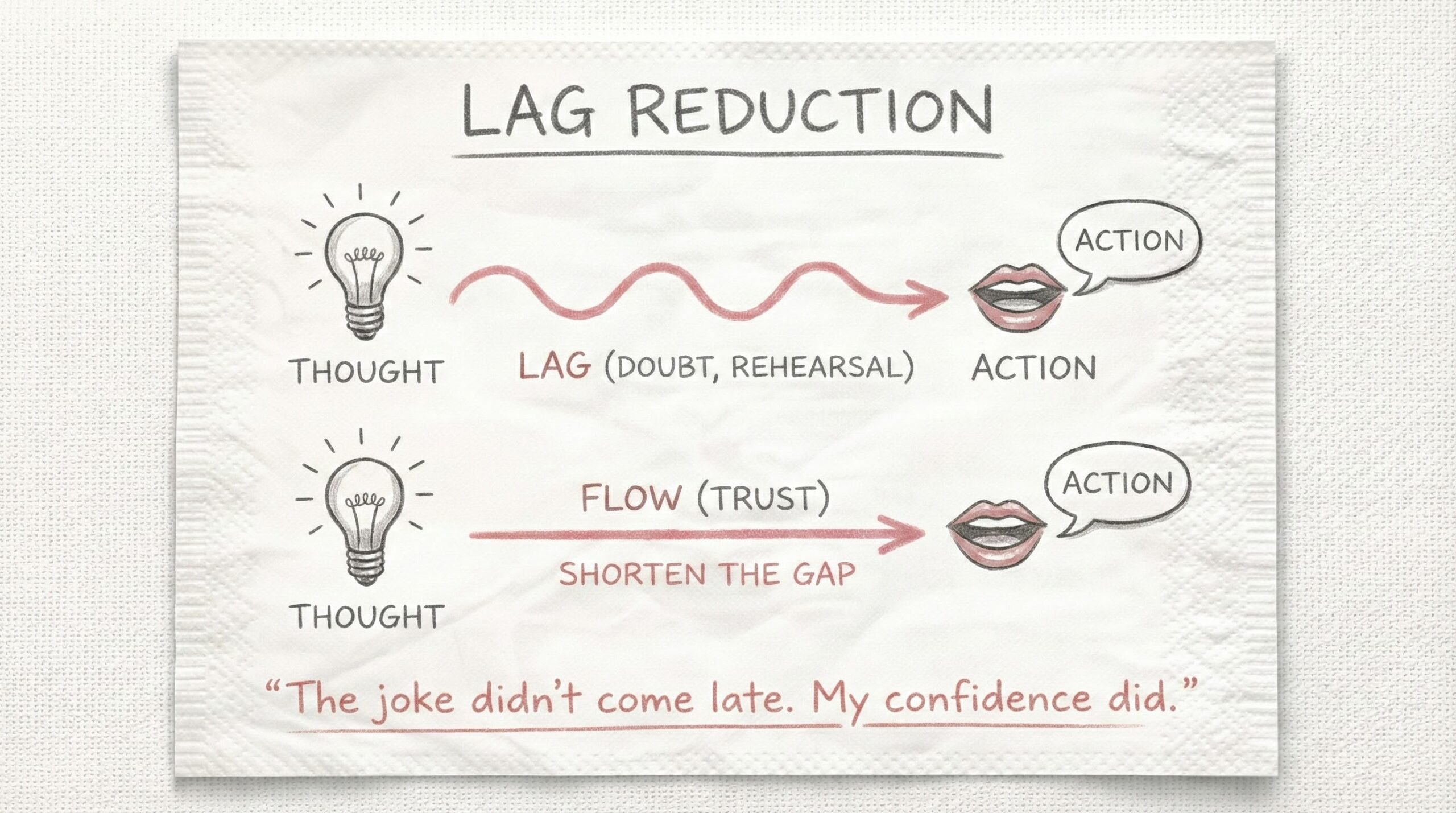
Your goal isn’t “be faster.” Your goal is reduce the time between thought and speech.
Because timing isn’t about intelligence. It’s about trust.
Do you trust your instincts enough to speak while the moment is still alive?
Here’s a drill that works like a tightening bolt:
The Two-Second Trigger
- When you notice something funny, give yourself two seconds to speak.
- If you don’t say it within two seconds, you drop it and move on.
- No rewinding later, no “I should’ve said,” no replaying it in the shower.
This teaches your brain that the only way your humor gets stage time is by showing up on time.
The truth nobody wants to hear
Most people don’t ruin jokes by saying the wrong thing.
They ruin jokes by:
- interrupting themselves
- overexplaining
- hesitating until the moment is dead
So if you’re looking for comedic timing tips, here’s the punchline.
You don’t need better jokes.
You don’t need to think faster.
You don’t need some cringe “confidence hack.”
You need fewer bad habits.
Timing gets better when you stop stepping on your own moments.
And once you start seeing this pattern, you’ll notice it everywhere: on dates, in meetings, in conversations with friends, even on stage.
If you'd like to get to the funny on time, or know when to let it go and prepare for the next, see if we can customize an approach to your comedic timing by booking a one-on-one comedy coaching session.